页面
Case 1
THE CHALLENGE
Why the Customer Needed Replacement
The customer’s key concern was not “buying rubber parts,” but keeping filtration cycles stable. In membrane filter press operation, early diaphragm failure can quickly lead to:
unstable cake discharge and cycle variation
leakage risk and sealing problems
higher maintenance frequency and downtime pressure
So this order focused on reliable, repeatable performance, not just basic supply.
Typical Challenges in Large Rubber Membranes
For diaphragm membranes used in membrane plates, the main technical risks usually come from:
Uneven thickness → weak spots and premature failure
Unstable bonding / vulcanization → delamination during inflation cycles
Edge sealing accuracy → micro-leaks and poor sealing under pressure
Repeatable inflation behavior → cycle instability if membrane response varies
THE SOLUTION
Our Solution
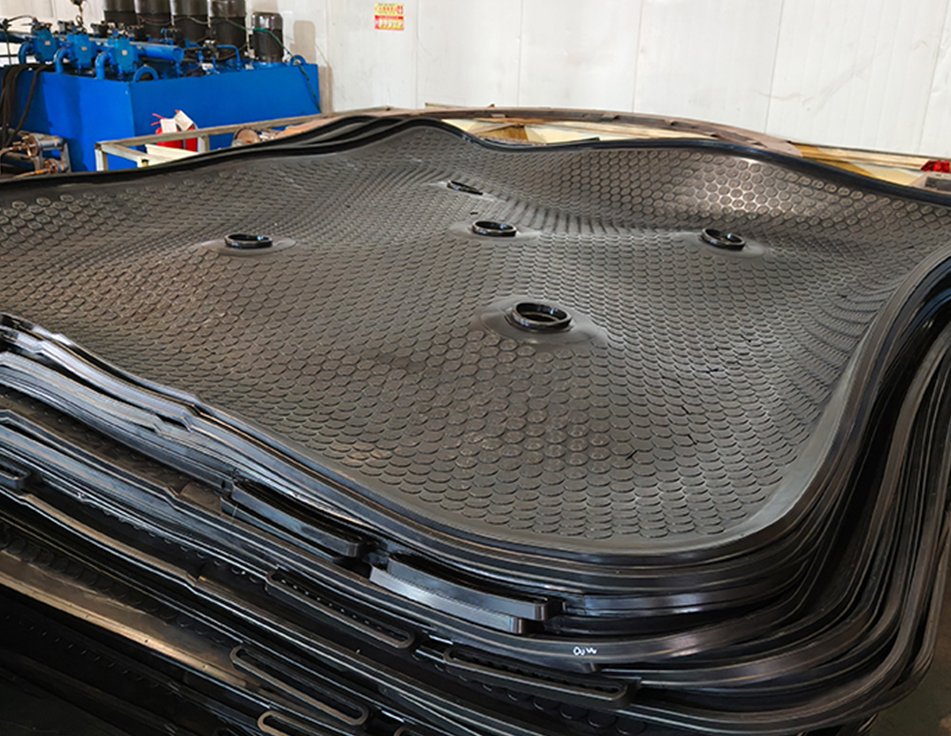
For this batch (2.0×2.0m and 1.5×1.5m), we controlled quality through:
Process control to keep thickness consistency for large-area membranes
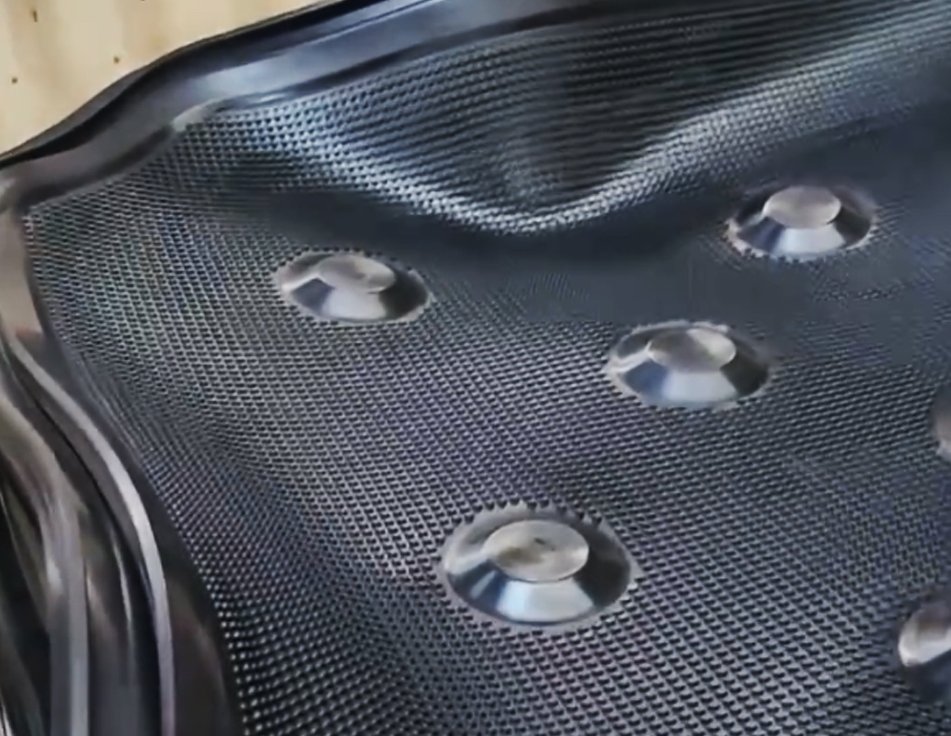
Bonding/vulcanization verification to reduce delamination risk
Edge sealing inspection to minimize leakage issues
Packing protection to prevent deformation during transport and handling
Result
100 pcs membranes finished, inspected, and packed for shipment
Target outcome: more stable inflation cycles, reduced early failure risk, and smoother maintenance planning for the customer’s membrane filter press line
THE RESULTS
Why the Customer Needed Replacement
The customer’s key concern was not “buying rubber parts,” but keeping filtration cycles stable. In membrane filter press operation, early diaphragm failure can quickly lead to:
unstable cake discharge and cycle variation
leakage risk and sealing problems
higher maintenance frequency and downtime pressure
So this order focused on reliable, repeatable performance, not just basic supply.
Typical Challenges in Large Rubber Membranes
For diaphragm membranes used in membrane plates, the main technical risks usually come from:
Uneven thickness → weak spots and premature failure
Unstable bonding / vulcanization → delamination during inflation cycles
Edge sealing accuracy → micro-leaks and poor sealing under pressure
Repeatable inflation behavior → cycle instability if membrane response varies
“The close cooperation and strong trust from our local partners, together with the stable and efficient operation of DOFILTRATION’s professional filtration solutions, have provided a solid boost to our production efficiency and sustainable development.”